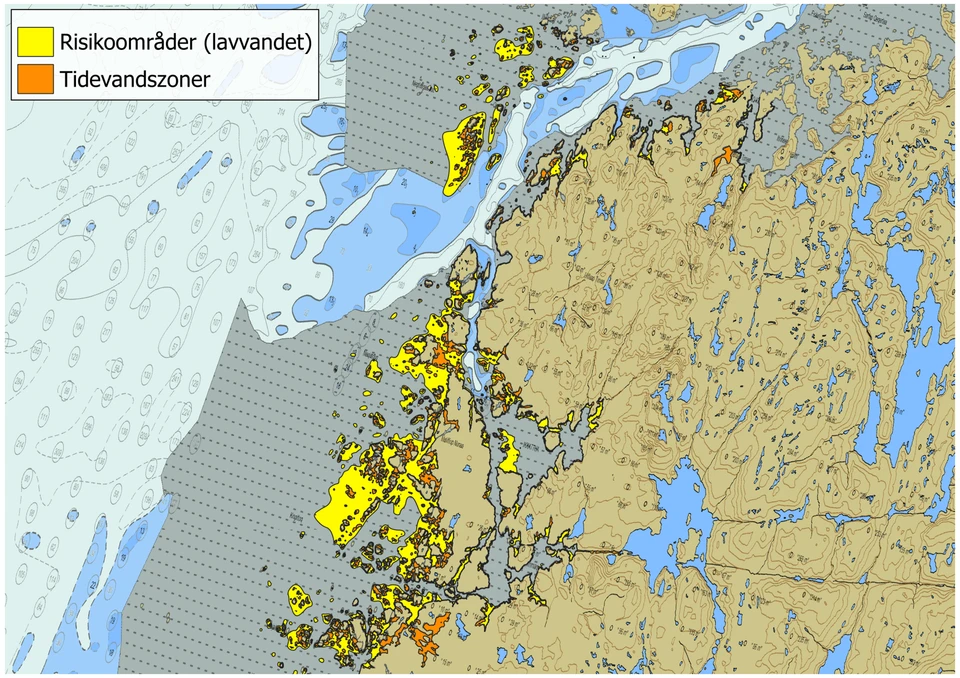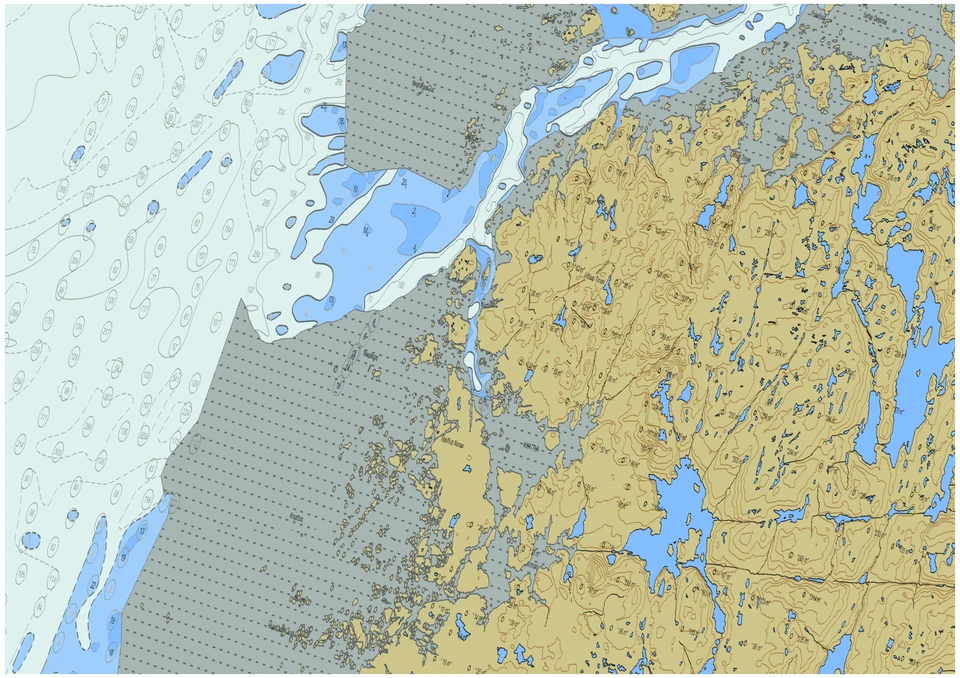

The aim of the pilot project is primarily to test the technology and assess user needs. The overall purpose of the mapping is to strengthen navigational safety, search and rescue capacity, and maritime infrastructure in Greenland. In September, the Danish Geodata Agency will hold meetings in Nuuk and Tasiilaq, where the pilot project results will be presented to relevant users and stakeholders.
Focus on navigational safety
The background for the pilot project, which began in 2023, is the increasing vessel traffic in the Arctic. Many coastal areas in Greenland have so far remained unmapped, creating challenges for safe navigation. The project has demonstrated that satellite technology now makes it possible to identify tidal zones, delineate coastlines more precisely, and highlight high-risk areas.
Close collaboration has been established with Asiaq, with the purpose of making the data freely accessible both via NunaGIS—the platform that provides public, private, and governmental access to maps and geospatial data across Greenland—and the Danish Geodata Agency’s website.
- At Asiaq we are very pleased with the collaboration with the Danish Geodata Agency and that, through NunaGIS, we can help make the new data easily accessible in Greenland. Knowledge of shallow waters and skerries is vital for safe navigation, and given the great distances in this country it is important to explore and utilise the opportunities satellite technology offers. This project is an excellent example of that, says Mette Skarregaard Pedersen, Director of Asiaq.